


Five Years of the Energiewerkstatt: Claas Rittinghaus on Wind Energy, Research, and the Move to Austria
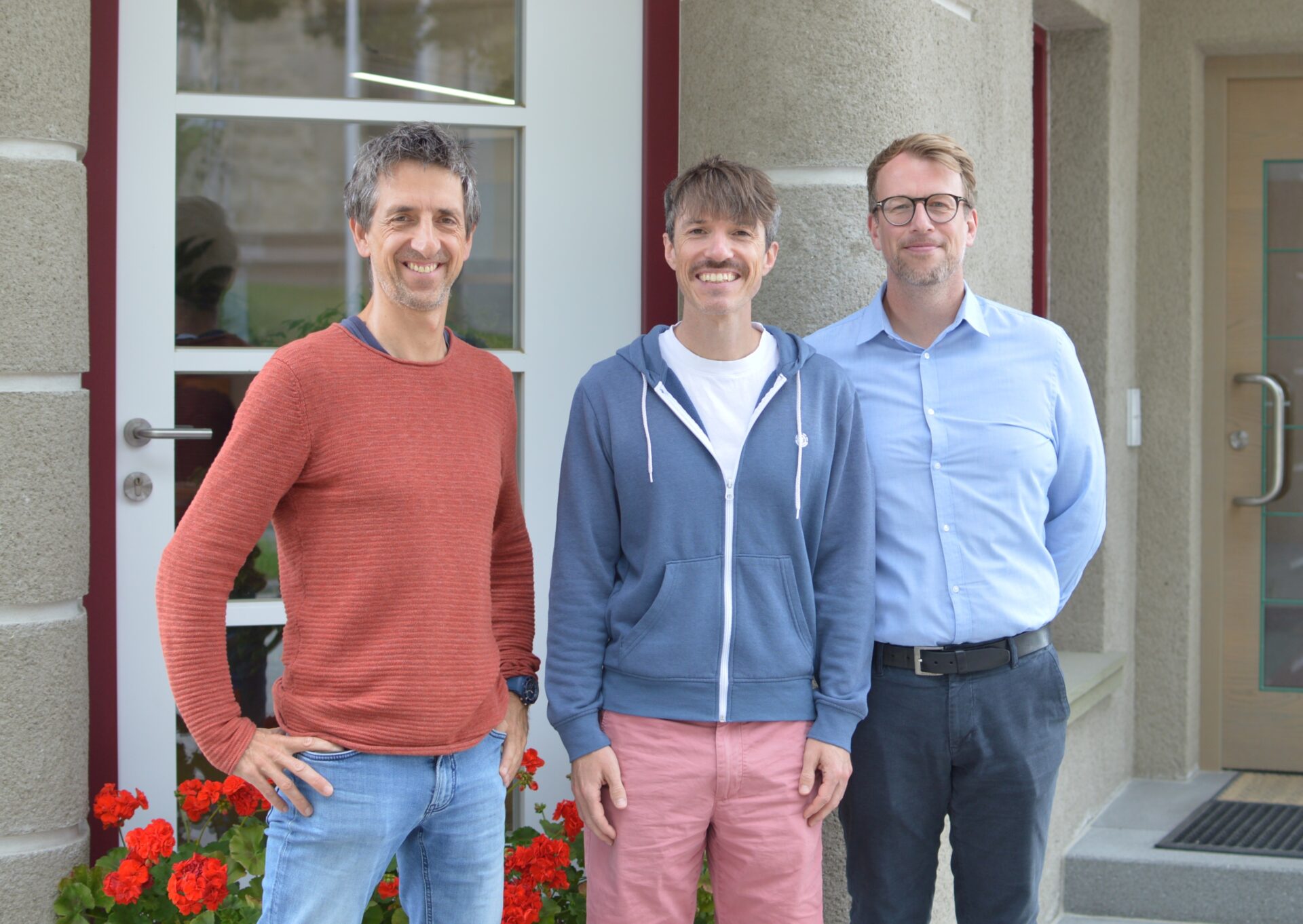
Published on
Share
When Claas Rittinghaus moved from East Westphalia to Austria five years ago, he wasn’t just looking for a new career opportunity. The proximity to the mountains also played an important role for him. At Energiewerkstatt, he found a professionally stimulating environment and a workplace where he quickly felt at home.
Today, the graduate physicist works as a project manager in Planning & Research. To mark his five-year anniversary with the company, we spoke with him about how he got started, his transition from a large corporation to a smaller company, wind energy in cold climates, and settling into life in Austria.
From the Job Interview in the Kitchen to the First Project
Claas, how did you end up at the Energiewerkstatt back then?“I came across Energiewerkstatt the traditional way—through a job portal. They were looking for someone to handle project management tasks. I’ve always been interested in wind energy, so the position was a great fit for what I was looking for.” |
What was your first impression of the company?“The difference from my previous work environment was very clear. I came from a corporate group with about 21,000 employees worldwide. The Energiewerkstatt was on a completely different scale.” My first impression was: friendly, down-to-earth, and very pleasant. I walked in through the front door; the job interview took place in the kitchen, and Andi was wearing climbing pants and felt slippers. For me, it was a completely different setting than many traditional job interviews: less formal, but more direct and personal.” |
Do you still remember your first project?“At first, I was more involved in research topics. My first substantive project was related to the continuation of an international IEA Wind Task (Task 19 at the time, now Task 54). Planning topics then gradually became a more central part of my work.” |
You switched from a large corporation to a smaller company. What was the biggest difference for you?“Above all, the processes and decision-making channels. In larger companies, there are many structures, committees, and reporting levels. Of course, there are reasons for this, but in day-to-day work, it can sometimes become a hindrance. You have to keep many departments informed, wait for decisions, and it’s harder to stay agile.” “At the Energiewerkstatt, the lines of communication are much shorter and more manageable. We work independently, but at the same time we try to further develop effective processes. I really like this combination.” |
What do you particularly appreciate about working at a smaller company?“The social and interpersonal aspects. Of course, even in large companies there are smaller groups where people work closely together. But here, it’s different. At Energiewerkstatt, the team works very well together. There’s a strong sense of camaraderie and the feeling that we’re all working toward a common goal.” |
Between Planning, Research, and Wind Energy in Cold Climates
Your role has changed over the past few years. How would you describe that?Over the past five years, I’ve delved much more deeply into the topic of wind energy. In certain areas, I’ve now become one of the key contacts at Energiewerkstatt. Today, I spend a lot of time working on planning projects—such as permit planning—while also remaining involved in research topics.” “In the area of research, the international IEA Wind Task 54 project is one of my main areas of focus. In addition, there are other projects on similar topics.” |
What is IEA Wind Task 54 all about?“At its core, this is about wind energy in cold climates. While this is a specialized topic within the wind industry, it is highly relevant for certain regions, such as the Alps, Scandinavia, or Canada.” |
What surprised you the most about international cooperation?“I was pleasantly surprised by how closely research and industry collaborate in this field. The group of people who are deeply involved in wind energy in cold climates is relatively small. As a result, everyone knows each other, works together openly, and strives collectively to advance the field.” “It’s less about isolation or patent hunting, as one might see in other fields, and much more about professional exchange. That’s pleasant and productive.” |
Arriving in Austria
Was there a moment when you realized, “This is where I belong”?“There wasn’t a single moment that stood out. But I realized very quickly that I really liked the work and the environment. Today, the bottom line is this: I feel very much at home here, and I’m very happy that I took the plunge.” |
How have you settled in Austria?“The adjustment wasn’t nearly as big as you might think. I’d spent a lot of vacations in Austria before, so I was already familiar with the country. Of course, there are differences in everyday life. I do sometimes miss the longer hours at supermarkets or the small bakeries from my home region. But overall, I’ve settled in very well.” |
Are there any Austrian expressions that you’ve picked up by now?“Yeah, ‘it works out’ or ‘it doesn’t work out.’ People use that all the time here, and eventually you just pick it up.” |
Mountains, Wind Energy, and Looking Ahead
You enjoy spending time in the mountains. Was that also a reason for moving to Austria?“Yes, definitely. The mountains were one of the main reasons I moved to Austria. Hiking, climbing, and ski touring are just part of my life.” |
Do you see a connection between your love of the mountains and your work in wind energy?“Yes, I do. I enjoy the mountains as a natural landscape. It gives me a deep sense of fulfillment to hike, to work hard, and to be out and about.” For me, this experience of nature is also a source of inspiration in wind energy. I see wind energy as one of the gentlest forms of energy generation. To me, a wind turbine seems almost like a delicate machine standing on a hill, simply turning in the wind. Of course, there is potential for conflict here as well, as with any form of energy production. But for me, the connection between nature, technology, and renewable energy is very strong.” |
What would you like to achieve in the next five years?“This might be a slightly nerdy answer, but I’d like to see Austria make significant progress toward its goal of meeting 100 percent of its energy needs with renewable sources. To me , that’s a cornerstone for many other developments.” “That was also one of the reasons why I left my previous workplace. At some point ,I found myself lacking personal motivation and a sense of purpose there. Today, my work feels more like a calling than just a job.” |
Claas, we’re glad you’ve been part of the Energiewerkstatt for five years. Thank you for your dedication, your curiosity, and for working with us on issues that matter to us. It’s great that we’re making a difference together. Here’s to many more years together!